
Nervous & Anxious Dogs: What Actually Helps
Every dog gets spooked now and then, but some dogs live with anxiety as more of a default state, jumpy on walks, unsettled at home, or dreading things most dogs shrug off. It's genuinely difficult to watch, and it's tempting to either fuss over them constantly or push them through it. Neither tends to help. Here's what does.
TL;DR — key points
- Learn the early signs: freezing, lip-licking, yawning, a tucked tail, hiding
- Common triggers include separation, unfamiliar dogs or people, new places, car travel and vet visits
- Comforting a scared dog doesn't reward the fear, it's fine to reassure them
- Never "flood" a nervous dog with what scares them, it usually backfires
- Gradual exposure at your dog's own pace, paired with positive reinforcement, works
- See a vet first to rule out pain or illness before assuming it's "just nerves"
Signs your dog might be anxious
Dogs rarely show fear the way we'd expect. It's often quiet and easy to miss unless you know what to look for: freezing on the spot, trying to avoid something or somewhere, ears flattened back, tail tucked low, hiding or cowering, going off their food, excessive yawning or lip-licking outside of mealtimes, digging, or barking and whining more than usual. Any one of these on its own might be nothing, but a pattern of them around a particular trigger is worth paying attention to.
Common triggers
The usual culprits are separation from you, loud unexpected noises (fireworks and thunder especially, see my fireworks and bonfire night guide if that's the main issue), unfamiliar dogs or people, new or unfamiliar places, car travel, and vet visits. Some dogs are anxious about all of these, others just have one specific thing that sets them off. Knowing which it is changes how you help them.
What not to do
The old idea that comforting a frightened dog "rewards" the fear isn't right, staying calm and offering reassurance doesn't make anxiety worse. What genuinely does make things worse is flooding: repeatedly exposing a dog to whatever frightens them, at full intensity, hoping they'll just get used to it. It usually backfires badly and can make a dog more fearful, not less. Forcing a nervous dog to "say hello" to another dog or a stranger falls into the same trap.
Comforting a scared dog rewards the fear and makes it worse.
Staying calm and reassuring a frightened dog doesn't reinforce the fear. What actually makes anxiety worse is flooding, repeated exposure at full intensity, not comfort.
What actually helps
Stay calm yourself, dogs pick up on our tension more than we'd like to admit. Give comfort if your dog wants it, and praise calm behaviour when you see it. Where possible, build in a safe space they can retreat to, a den-like spot with their own bed works well for a lot of dogs. For a specific fear, gradual exposure at a low enough level that your dog stays relaxed, building up slowly over days or weeks, works far better than one big push. Keeping a predictable daily routine also helps more than people expect, dogs settle when they know what's coming next.
How I approach a nervous dog on walks
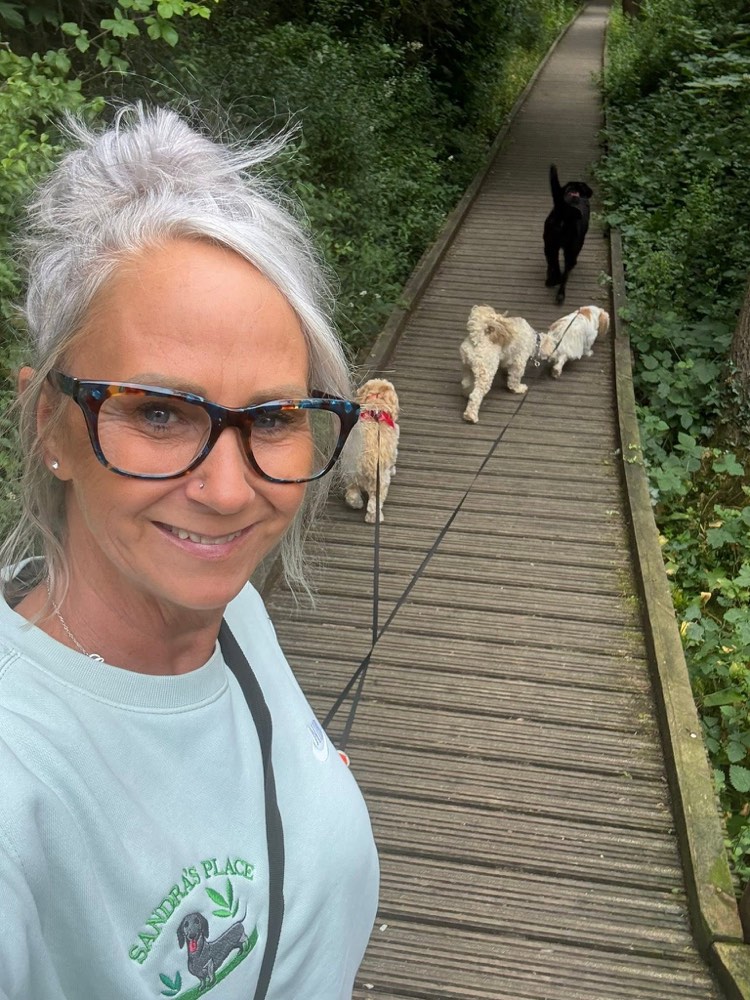
Walks are always capped at a maximum of four dogs, so it's never an overwhelming pack in the first place. For a dog who'd still find that too much, or who doesn't get on well with unfamiliar dogs, I use quieter, fully enclosed private fields instead of busy open spaces, exactly what they're there for (see my guide to the best places to walk dogs in Peterborough for more on those). Everything's adjusted to whatever suits that particular dog, not a one-size-fits-all route.
How I approach a nervous dog boarding
Every new boarder starts with a settling-in "Stay & Play" session before their first overnight stay, so a nervous dog gets to explore the house and garden and meet me properly while you're still there, rather than being dropped somewhere completely unfamiliar. Numbers stay low and it's a real home, not an institutional kennel run, both of which tend to matter a lot to an anxious dog (my guide to choosing a boarding service covers what to look for generally).
See a vet first if anxiety appears suddenly, or gets worse. Pain and illness can look a lot like anxiety, a dog in discomfort often becomes more fearful or clingy. Your vet can rule out a medical cause and, if needed, refer you to an accredited behaviourist who specialises in this, sometimes alongside a training plan or medication for more severe cases.
None of this needs to be complicated. If car journeys are the trigger, my car sickness guide covers gradual travel training. Spot the early signs, work out the actual trigger, avoid flooding, and build confidence gradually rather than expecting it overnight. If your dog's anxiety is around being left alone, unfamiliar dogs, or a new environment while you're away, message me and we can talk through what would actually suit them before booking anything.
Where this advice comes from
I've written all of the above in my own words, but the behavioural side isn't mine to invent. I've checked it against the vets and behaviourists who publish this properly, and their versions are worth reading in full:
- PDSA on dogs and phobias
- VCA Animal Hospitals on signs your dog is stressed and how to relieve it
Checked against the sources above in September 2026. It's general advice, not advice about your own dog, so if anxiety appears suddenly or gets worse, see your vet.
Related guides