

Ticks and Your Dog: What Every UK Owner Should Know
Ticks are one of those things I get asked about constantly, especially once the grass gets long and the weather warms up. They're small, easy to miss, and I know they make some owners a bit squeamish, but a bit of know-how takes all the stress out of dealing with them. Here's what I check for on every dog in my care, and what I'd want every owner to know.
- Spring–autumn peak
- Can carry Lyme disease
- Check after walks
TL;DR — key points
- Yes, ticks are common across the UK, especially spring to autumn
- Check ears, neck, armpits and between the toes after every walk
- Use a proper tick removal tool and turn steadily, don’t pull straight up
- Never use a match, alcohol or nail varnish to try to make a tick let go
- Watch for lethargy, fever or swollen joints in the days or weeks after a bite
Quick reference only — this is a shortened summary, not medical advice. For anything urgent, read the full guide below and contact your vet.
Are ticks a problem in the UK?
Yes. Ticks are common across the UK and can turn up on dogs, especially from spring through to autumn when they're most active. They live in woodland, grassland, heathland and anywhere with long grass or leaf litter, including plenty of the spots in my guide to the best places to walk dogs in Peterborough. Most tick bites don't cause any lasting harm, but ticks can carry diseases such as Lyme disease, so they're worth taking seriously, not ignoring.
It's not just anecdotal, either. UKHSA's Tick Surveillance Scheme, which has tracked tick submissions across the UK since 2005, recorded a clear seasonal spike in 2025: 166 tick records that June alone, above the 10-year average of 145 for that month, before tailing off through autumn and winter.
Where dogs pick up ticks
Ticks don't jump or fly. They climb up onto grass, bracken or the edge of a leaf and wait with their front legs outstretched, a behaviour called "questing", ready to latch on as soon as a dog (or person) brushes past. That's why they're so common in long grass, woodland edges and scrubby, overgrown areas, and much rarer on a short, open lawn or a hard-surfaced path.
Checking your dog after a walk
I run my hands slowly over every dog after a walk during tick season, feeling for anything that wasn't there before. A tick can hide almost anywhere, but I pay particular attention to:
- Around the ears and inside the ear flaps
- The head, neck and under the collar
- Between the toes and around the paws
- The armpits and groin
- Anywhere the coat is thinner or the skin is exposed
It only takes a couple of minutes, and it's worth doing every time during the warmer months, not just when you remember.
What does a tick look like?
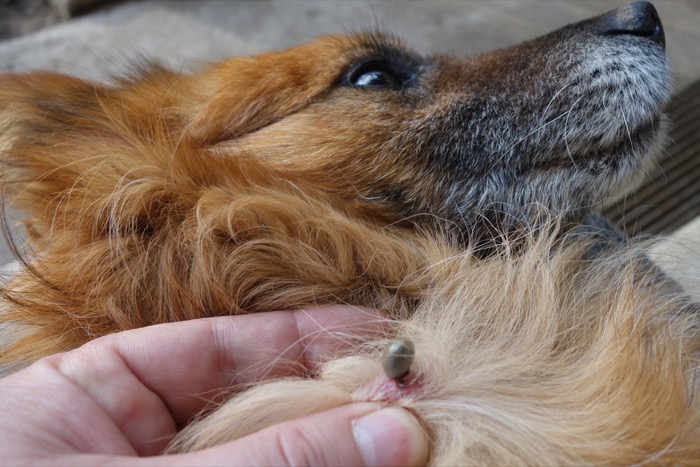
An unfed tick is small, greyish-brown and spider-like, often no bigger than a poppy seed, which is exactly why they're so easy to miss on a quick check. Once they've been feeding for a day or two they swell into a dull grey or blue-green pea-sized blob. Even then, if you look closely you can usually still see tiny legs near the head, which is the easiest way to tell a tick apart from a skin tag or wart.
Ticks jump or fly onto dogs from trees or bushes.
They can't jump or fly at all. They climb onto vegetation and grab hold as a dog brushes past, which is why staying on clearer paths in long grass season helps.
A tick bite always means my dog will get ill.
Most tick bites cause no lasting harm at all. Removing the tick promptly and correctly makes disease transmission far less likely, which is exactly why a quick check after every walk matters.
How to remove a tick safely
- Use a proper tick removal tool if you have one, they're inexpensive and widely available from vets and pet shops, and make this far easier than fingers or ordinary tweezers.
- Work the hook in underneath the tick, sitting it right down against the skin.
- Don't pull upwards. Turn the tool steadily in one direction, two or three times, and the tick will let go of its own accord. Then lift it clear. Pulling risks leaving the mouthparts behind, and squeezing the body can push blood back into the bite.
- Once it's out, clean the bite site with some pet-safe antiseptic and keep an eye on it over the following days.
Never use a lit match, alcohol, petroleum jelly or nail varnish to try to make a tick let go first. This can stress the tick into releasing more of its stomach contents into the bite, which is the opposite of what you want.
If you can't remove a tick fully, notice the head has stayed in the skin, or you're simply not confident doing it yourself, contact your vet, they'll happily do it for you.
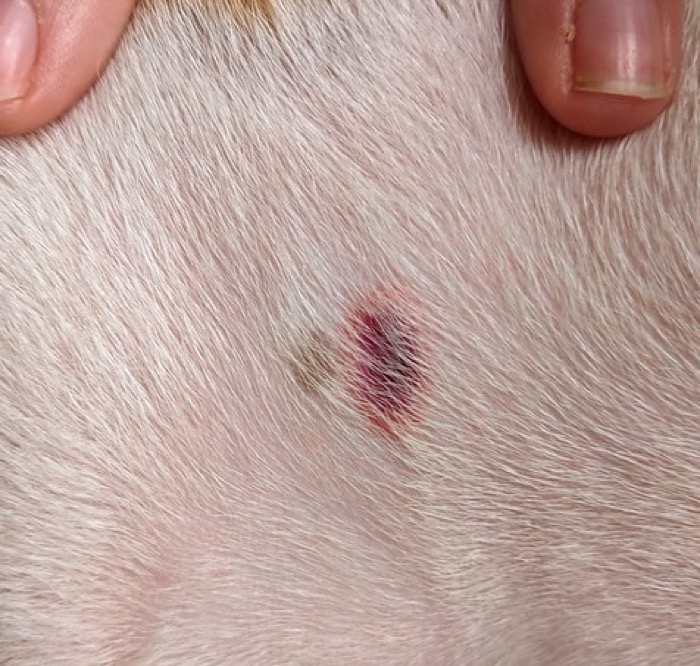
It's normal for the bite site to look a little red and irritated for a day or two afterwards, as in the photo above. If it keeps growing, develops a rash around it, or your dog seems unwell, get it checked by a vet.
Signs of tick-borne illness
Watch for lethargy, a high temperature, loss of appetite, and lameness or swollen, painful joints, these can appear days or even weeks after a bite, not just immediately. If you spot any of these, especially if you know your dog has picked up a tick recently, it's worth a trip to the vet.
Not veterinary advice: this guide is general information, not a diagnosis or treatment plan. If you're ever worried about a bite, a tick you can't remove, or your dog seems unwell, please speak to your vet.
Handy to have your vet's details somewhere obvious, so you're not digging for them if your dog seems off after a bite. My free printable pet emergency card keeps them, and a few other useful numbers, in one place.
Prevention
A few habits go a long way:
- Ask your vet about a suitable year-round tick preventative for your dog, there are several types and the right one depends on your dog and lifestyle
- Check your dog after every walk during spring, summer and autumn, not just if they seem itchy
- Stick to clearer, well-trodden paths instead of pushing through long grass or bracken where you can
- Keep your own garden grass reasonably short if your dog spends a lot of time in it
Ticks aren't something to panic about, just something to stay on top of. If you're ever unsure about a tick, a bite, or anything else, message me, I'm always happy to talk it through.
Where this advice comes from
The removal technique in particular is worth getting from the vets direct, so here's where to read it in full:
- PDSA on how to remove a tick and ticks on dogs
- Blue Cross on ticks on dogs
Related guides