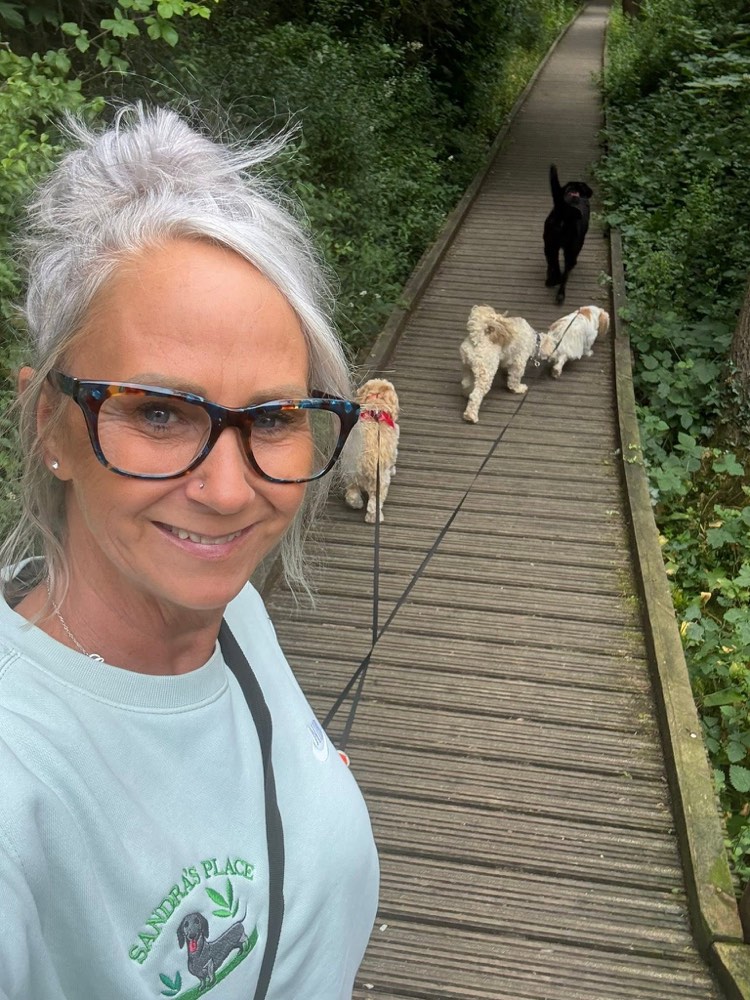

What to Look For in a Dog Walker
Handing your keys and your dog to someone else is a big thing to do, and it usually happens on the strength of a friendly message and a nice photo on Facebook.
I'd rather you asked me difficult questions than didn't, so here's what I'd really want a friend to check. Some of it doesn't flatter my own trade.
TL;DR — key points
- Dog walking isn’t licensed in England, anyone can call themselves a walker
- Ask to see proof of “care, custody and control” insurance, not just public liability
- Ask how many dogs they walk at once, six is a common insurance cap, four is safer
- Ask about first aid training and what happens in an emergency
- Get vet details, emergency contacts and terms in writing before the first walk
Start here: there's no such thing as a licensed dog walker
This is the part most owners don't know, and it matters more than anything else on this page.
In England, dog walking isn't a licensable activity. Home boarding needs a council licence, and so does dog day care, but walking needs nothing at all. The government's own guidance for councils puts dog walkers outside the licensing rules entirely.
So there's no inspection, no minimum standard, and no register. Anyone can decide tomorrow morning that they're a dog walker, and by lunchtime they are one. Nobody checks.
Be wary of anyone advertising as a "licensed dog walker". For walking alone, there's no such licence to hold. If someone mentions a licence, it's worth asking politely what it's actually for. A boarding or day care licence is a real thing and a good sign, but it isn't a walking qualification, and it shouldn't be waved about as though it were.
Insurance, and the specific words to look for
Because there's no licence, insurance is the first real check you can make. There's no law forcing a self-employed walker to have any, which is exactly why you should ask to see the certificate instead of just taking their word for it.
The phrase that matters is care, custody and control. That's the part covering your dog while it's in their charge. Plain public liability covers damage your dog does to someone else, which isn't the same thing at all.
Worth knowing too: most policies cap how many dogs can be walked at once, commonly six. A walker over their own limit may not be covered, which means neither are you.
Ask how many dogs, and don't be shy about it
There's no single legal limit across England, though plenty of councils set one in their local rules. Insurers set their own.
The practical point is simpler. The more dogs on the lead, the less any one of them is being watched, and the harder it is to do anything about it if something goes wrong. I keep my own groups to four dogs at most, which is as many as I can properly keep an eye on.
Qualifications, and first aid especially
Loving dogs isn't a qualification, and anyone can say it. Ask what they actually hold.
First aid is the one I'd push hardest on, because your walker is the person who'll be there if your dog chokes on something or cuts a pad open miles from the car. My dog first aid guide covers what that actually involves, and it's a fair thing to ask any walker to talk you through.
Meet them first, with your dog there
Anyone happy to take your booking without meeting your dog is telling you something. Watch how they greet each other, whether they crouch down or loom over, and whether they ask you anything about your dog's habits.
Watch your dog too. Dogs are usually a better judge of this than we are.
Your keys and your house
Most walkers need access to your home, which is a bigger deal than the dog side and gets discussed far less.
- How are keys labelled? Your address on a keyring is a bad idea, and a coded tag is the answer
- Where are they kept between walks, and who else has access to them?
- Will they let you know if a walk gets missed, and how?
- Have they had a DBS check? It isn't required for this work, but plenty of walkers get one, and it's a perfectly reasonable thing to ask
What happens when something goes wrong
This is the question I'd ask above all others, because a good answer comes straight out and a poor one waffles.
- Do they hold your vet's details, and your emergency contact, in writing, before the first walk?
- Who decides to go to the vet, and who pays on the day if they can't reach you?
- What would they do if your dog slipped a lead and ran? (My guide on what to do if your dog goes missing is roughly the answer I'd want to hear.)
- How would you be told, and how quickly?
How your dog gets there
If your dog is being driven to a walk, ask how they travel. Crated, harnessed and seatbelted, or loose in a boot are very different answers, and it's worth knowing which one you're agreeing to.
Ask where they'll actually be walked, too. I've written up my own favourite spots around Peterborough, and any walker worth using will have firm opinions about where they take dogs and why.
They're legally in charge, so it helps if they know it
While your dog is with a walker, quite a lot of the law sits on their shoulders, not yours. Whoever has charge of a dog at the time can be held responsible for it worrying livestock or being dangerously out of control, and the Animal Welfare Act duty of care applies to anyone looking after an animal, not only its owner.
My plain-English guide to dog law goes through it properly. A walker who knows this already is a walker who's thought about the job.
Get it in writing
Rates, cancellation terms, what happens in bad weather, who's liable for what. None of it needs to be complicated, but it should exist before the first walk, not get worked out after a disagreement.
The cheapest walker is the best value, since it's only a walk round the block.
A very low rate usually means bigger groups, less time per dog, or no insurance to pay for. None of those are savings, they're just costs that land somewhere else, usually on your dog.
Quick red flags
- Won't show you an insurance certificate, or gets prickly about being asked
- Vague about how many dogs they take out at once
- Happy to start without ever meeting your dog
- No written terms of any kind
- Can't tell you what they'd do in an emergency
- Advertises a "licence" for dog walking that turns out not to exist
How I'd answer my own questions. I'm fully insured, I keep groups to four dogs per walker, and I hold a Level 3 Diploma in Dog Grooming, Walking & Training alongside diplomas in Animal Care and Dog First Aid. Every dog's vet and emergency contact details are written down before we start, everything is set out in a straightforward Service Agreement, and my home is council licensed for boarding to the Higher Standard (Licence No. 132982), which is a boarding licence, not a walking one. Walking stays local to Peterborough and the nearby villages (see the full areas I cover), so your dog's time is spent walking, not sat in a car.
If you'd like to ask me any of the above, please do, I'd far rather you did. Message me and we'll arrange a proper introduction. If you're weighing up boarding as well, my guide to choosing a dog boarding service covers that side, and how often your dog needs walking will help you work out what you're actually asking for.
Where this advice comes from
The licensing position is the government's own, and worth reading if you'd like to check it yourself:
- GOV.UK: dog day care licensing, statutory guidance for local authorities, which sets out that dog walkers and sitters fall outside the licensing scope
- The Animal Welfare (Licensing of Activities Involving Animals) (England) Regulations 2018
Checked against the sources above in August 2026. This is general guidance for owners, not legal advice, and licensing rules differ in Scotland, Wales and Northern Ireland.
Related guides